
David Sweeney-Bear

Audiobook Narration, Production, Voice-Over, Sound Design & More

Voice Arts Award Winner 2026
audible approved producer

Author: David

  • How to Find Your Narrative Voice as an Audiobook Narrator

    How to Find Your Narrative Voice as an Audiobook Narrator

    If you’re wondering how to find your narrative voice as an audiobook narrator, start by asking a deceptively simple question: who is the narrator?

    When it comes to audiobook narration, most voice actors spend a lot of time thinking about characters.

    What do they sound like? How old are they? Where are they from? What is their personality? What is their character arc?

    And if you’re narrating fiction, particularly a book with a large cast of characters, there can be a lot to keep track of. We think about voices, accents, mannerisms, and attitudes, and try to make each character distinctive enough that the listener can follow who is speaking.

    For an example of this more character-focused approach, take a look at this article from Voices.com.

    But there is another character in the book that is very easy to overlook:

    The narrator.

    The Narrator is Also a Character

    This is something I didn’t really think about when I first started narrating. It took me a while to realise that finding that voice is part of the narrator’s job too.

    With books written in the first person, it is fairly obvious. Somebody is telling us the story, and that somebody may also be one of the characters in it.

    If the text says:

    I was late that morning, and I was rushing for the bus.

    there is a very obvious person behind those words.

    They have a voice, a personality. They have a particular point of view. If they are also a character in the story, then it is fairly natural to think about what they sound like and how they would tell their own story.

    But what about third-person narration?

    It is tempting to think of the third-person narrator as simply being you, just the voice that reads the words on the page.

    I think it can be much more useful to think of them as a character too.

    Not necessarily a character who actually appears in the story. They may never be seen, spoken to, or even acknowledged by anyone in the book. But they are still the person telling the listener what is happening, and that means they have a point of view.

    The narrator’s voice

    Whenever I approach a new piece of writing, one of the things I now try to establish fairly early on is the voice of the person telling it:

    Who is this narrator?

    What kind of voice suits this story?

    What is the narrative telling me about the “character” of the storyteller?

    Do they have a particular accent, age, or style?

    Are they formal or conversational? Warm or detached? Serious or playful?

    Are they emotionally involved in what they are telling us?

    Sometimes the answers will be obvious from the writing. Sometimes they won’t. If it’s an audition piece with little supporting information, then you often have to make your best guess. Personally, I often try to seek out further info on a book, if it’s available, in order to answer some of these questions if they are not obvious from the audition excerpt itself.

    And I’m not suggesting that you should invent a completely separate “character voice” for the narrator. In many books, that would be completely wrong. It may be that the narrator simply sounds like a natural version of yourself. But, even then, I think it is useful to have made that decision consciously.

    There is a difference between deciding that the narrator is essentially neutral and simply not thinking about the narrator at all.

    The narrator is a character in the listener’s mind

    There is another reason I find this useful.

    Think about the experience of listening to someone tell you a story. Even if you know nothing about them, you naturally form some kind of impression of the person doing the telling:

    Are they excited by what they are telling you?

    Amused?

    Frightened?

    Are they detached and analytical?

    Are they the sort of person who enjoys telling stories?

    The same thing happens with an audiobook. The narrator becomes a character in the mind of the listener, simply because they are the person telling them the story. That doesn’t mean the listener consciously thinks, ‘Ah, here is the narrator character.‘ It is much more subtle than that.

    But there is somebody on the other side of the microphone, and the listener will inevitably get some sense of who that person is. I think that is worth using.

    First person makes it obvious

    First-person narration is probably the easiest example.

    If the narrator is also the protagonist, then you obviously have a character voice to consider. But there is another subtlety here: The person telling the story isn’t necessarily the same person they were when the events actually happened.

    Imagine somebody telling you about something that happened to them twenty years ago. The person speaking to you now has twenty years of hindsight. They may understand things that they didn’t understand at the time. Or they may be amused by their younger self, or embarrassed, or angry.

    All of that potentially influences the way the story is told. So, even with first-person narration, there can be more going on than simply finding a voice for the protagonist.

    And that, in a sense, is the beginning of finding your own narrative voice: working out who you are in relation to the story you are telling.

    You’re finding the voice of the person telling the story.

    Third person doesn’t mean neutral

    Third-person narration can make this much less obvious. The narrator may appear to be an invisible presence, simply describing what happens. Third person tells us how the story is grammatically written. It doesn’t necessarily tell us whose point of view we are experiencing.

    This is where I think it is particularly useful for a narrator to understand the difference between an omniscient narrator and a limited point of view.

    An omniscient narrator, in the traditional sense, knows everything.

    They can tell us what different characters are thinking, tell us what happened years ago, and what is happening somewhere else at the same time. Crucially, they can tell us what any character is thinking or feeling.

    They can move around the story almost without restriction.

    A limited narrator is different.

    The book may still be written in the third person, but we are experiencing events primarily through the point of view of one particular character. Oftentimes, this is known as third-person POV (Point of View) writing. The information, impressions, thoughts, and feelings that the narrator expresses are limited to the POV of a particular character.

    In fact, you may often encounter various combinations of the limited and omniscient narrator within the same book. It’s also possible to have limited POV narration for not just one character, but two or even several. There are no hard and fast rules!

    What matters is to be aware of these shifts in perspective and to think about how they can be best presented via your narrative voice.

    The more clearly you understand that relationship, the more confidently you can make decisions about how the story should sound.

    Whose point of view are we with?

    Imagine a scene involving a character called Emma Carter. The book is written in third person:

    Emma walked slowly towards the door.

    You’re not necessarily supposed to read that literally in Emma’s character voice. You’re still the narrator. But if the scene is being told from Emma’s point of view, then you’re experiencing the scene with Emma.

    If the previous paragraph described how Emma felt about the possible contents of the room, her trepidation, uncertainty, a looming sense of creepiness… then that seemingly simple line, ‘Emma walked slowly towards the door,’ can be the perfect opportunity to convey that sense of dread and hesitance that puts us squarely in Emma’s head without the narrator having to ‘become’ or ‘sound like’ Emma.

    You’re not suddenly becoming Emma; you’re telling the story from Emma’s point of view. That’s an important distinction. The narrator’s voice remains the narrator’s voice, but the narrator is now looking at the world through Emma’s eyes.

    Once you start thinking about it that way, it becomes much easier to put a little bit of emotion into narrative passages without turning them into character dialogue.

    But…

    Don’t overact it

    There is an obvious danger here.

    Once we start talking about putting emotion into narration, it is very easy to go too far. I’m not suggesting you should perform every descriptive sentence like a dramatic monologue. Quite the opposite.

    The effect I’m talking about can be very small: A slight change in energy; A little more tension; A touch of warmth; A subtle change in pace; A word given slightly more weight…

    Sometimes it’s barely perceptible, but those little things can help the listener feel that there is somebody behind the words.

    This is particularly important when you’re reading descriptive passages.

    Dialogue gives you an obvious opportunity to perform a character. The character is speaking, so you can give them a voice, whereas narrative is different. There may be long stretches where nobody is actually speaking. That’s where thinking about the narrator can help.

    Imagine you’re telling the story to someone

    One of the simplest exercises I’ve found useful is to stop thinking about the microphone for a moment.

    Imagine that you’re sitting in a room with one person and telling them the story.

    Rather than reading it to them, think of it as telling it to them.

    Who are you?

    What is your relationship with them?

    How do you feel about the story you’re telling?

    If something frightening has just happened, are you going to tell them about it in exactly the same way as you would describe an ordinary walk down the street? Probably not.

    You don’t necessarily have to perform the fear. But the fact that you know the scene is frightening might subtly affect the way you tell it, and that’s often enough.

    I think this is one of the reasons that good narration should still feel natural. Despite all the mental preparation that might have gone into deciding how to voice ‘the narrator’, in the end, you don’t want to sound like you’re trying to “sound like a narrator”.

    You’re simply telling a story in a way that brings it to life.

    The narrator can carry emotion without becoming a character

    This is perhaps the part that took me the longest to appreciate.

    When you’re starting out, there can be a tendency to think that you have two modes:

    Character mode — I’m acting.

    Narrator mode — I’m reading.

    But I don’t think it really works that way. The narrator can be emotionally present without becoming another character in the conventional sense. You can be the storyteller without stealing the scene from the characters. In fact, I think that is often the sweet spot.

    The narrator is there, but doesn’t draw attention to themselves. They give the listener enough emotional information to understand how the scene feels, while still allowing the story and its characters to remain the focus.

    This is particularly important when you’re working with limited point of view.

    If we’re seeing a scene through Emma’s eyes, for example, then the narration should reflect what Emma is experiencing. But, it shouldn’t suddenly sound as though Emma herself has started narrating the book. That distinction can be very subtle. And, as with so many things in narration, subtlety is often the key.

    A useful exercise for new narrators

    If you’re new to audiobook narration, try doing this the next time you start a new book.

    Before you worry too much about performance, read a few chapters simply to understand the story.

    Then ask yourself:

    Who is telling me this story?

    It sounds like a simple question, but it can be surprisingly revealing. It may tell you more about the voice you need to adopt than any instruction to “sound like a narrator” ever could.

    You might make a few notes.

    • What kind of voice suits this story?
    • What does the writing tell me about the character of the storyteller?
    • Are they formal or conversational?
    • Warm or detached?
    • Serious or playful?
    • Do they have a particular age or style?
    • Are they emotionally involved in what they’re telling me?
    • Is the narrator omniscient?
    • Or are we experiencing the story through a particular character’s point of view?
    • If it’s limited POV, whose point of view are we with in each scene?

    You don’t necessarily need definitive answers to all of these questions. The point is to start thinking about them. Then try reading a passage twice. The first time, read it as you normally would. The second time, put one simple idea in your head:

    I am somebody telling this story to somebody else.

    Then listen back.

    You may be surprised by how much difference such a small change in thinking can make.

    One more character to think about

    When I first started narrating, I spent a lot of time thinking about the characters in a book.

    I still do, but I think there is a tendency, particularly when you’re starting out, to treat everything outside of dialogue as something that simply needs to be “read”. The character speaks; we perform the character. The character stops speaking, and we go back to being the neutral narrator.

    But perhaps there isn’t really such a thing as a completely neutral narrator.

    Even if the narrator is deliberately restrained, that restraint is itself a choice. The narrator has a relationship with the story; they have a relationship with the listener. They know some things; they may not know other things. They may be looking at the story from above, or they may be standing beside one particular character and experiencing it with them. If we give a little thought to who that person is, I think we can breathe life into the parts of a book that might otherwise become rather flat.

    So when you pick up your next manuscript, spend some time thinking about the characters:

    Think about their voices, about their motivations, their arcs.

    But before you press record, ask yourself one more question:

    Who is the narrator?


    Once you’ve started to think about the narrator as a distinct presence rather than simply a neutral reading voice, it can be useful to listen to how different approaches work in practice. You can hear examples of different approaches to audiobook narration and narrative style in my audiobook samples.
  • How Do You Arrest a Goddess? Narrating Mumbai Singularity by Nym Coy

    How Do You Arrest a Goddess? Narrating Mumbai Singularity by Nym Coy


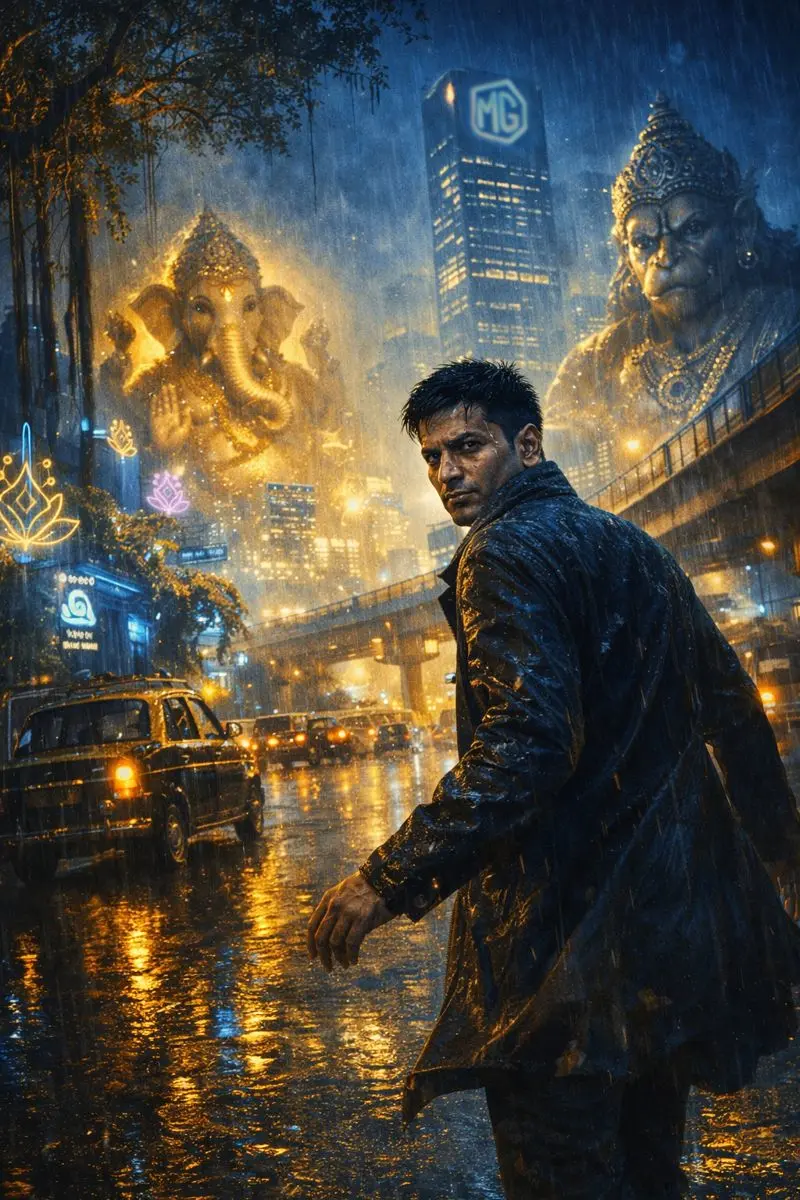
    I am delighted to announce that I will narrate and produce the audiobook edition of Mumbai Singularity, Nym Coy’s mythic cyberpunk detective thriller — and that the Kickstarter campaign funding the production is now live. This is exactly the kind of ambitious, character-rich speculative fiction I love working on, and I would be grateful for your support in bringing it properly to audio.


    How do you arrest a goddess?

    That is the question at the heart of Mumbai Singularity, and it is not rhetorical. The story unfolds in a future Mumbai where augmented reality overlays almost every surface — streets, shopfronts, faces — until the city feels less like a place you walk through than a layer you inhabit. Inspector Krishna Mehta’s damaged mesh antenna intermittently disconnects him from that augmented world, leaving him stranded in the raw city underneath.

    And that is when he begins seeing faint rainbow marks on people’s foreheads — marks nobody else can see. When the marked start dying from catastrophic brain haemorrhages, his investigation leads towards a hospital shrine, a corporate conspiracy, uploaded human consciousness, and the Hindu gods themselves. The conspiracy may already be inside his partner’s head. It begins as a murder investigation, but it does not remain one.


    Why this project speaks to me

    Mumbai Singularity combines detective noir, cyberpunk, conspiracy fiction, Hindu mythology and metaphysical science fiction in a way that feels genuinely integrated rather than assembled from spare parts. Its mythology is not decorative wallpaper pasted over a standard thriller plot; it is woven into the novel’s ideas about consciousness, identity and belief. Coy asks what happens when ancient notions of gods, reincarnation and the soul encounter technologies capable of making some of those ideas disturbingly literal.

    For all its large philosophical reach, the book remains grounded in Krishna’s relationships — above all with his mother and his partner — and that emotional anchor matters enormously in audio. A story this layered offers substantial scope for character performance and vocal world-building: the augmented city and the city beneath it, corporate corridors and shrine rooms, voices shaped by age, status, background and temperament rather than a single undifferentiated register.

    A personal connection — and a responsibility

    I grew up with considerable exposure to Indian culture and became proficient in Hindi and Urdu as a child. Much of that vocabulary has naturally receded over the years, but the sounds, rhythms and musicality of the languages left a lasting impression. That history gives me a valuable starting point for a novel set entirely in Mumbai — yet it is a starting point, not a shortcut. This production will still involve careful research.

    My aim is to create recognisable individuals differentiated by age, personality, background and status — not a collection of interchangeable or caricatured “Indian accents.” Inhabiting Krishna’s world properly means listening as carefully as I perform.


    Hear the first audiobook sample

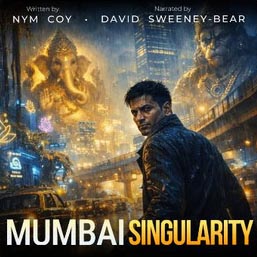
    Audiobook cover for Mumbai Singularity by Nym Coy, narrated by David Sweeney-Bear

    Mumbai Singularity by Nym Coy

    Mythic cyberpunk · Detective thriller · Indian English performance

    Audiobook sample from Mumbai Singularity by Nym Coy, narrated by British male narrator David Sweeney-Bear.

    What the Kickstarter is funding

    Nym Coy is crowdfunding the audiobook because she wants it done properly — full professional narration, mastered audio and wide distribution, without cutting corners. Your backing helps fund:

    • Performance preparation and pronunciation research
    • Narration and character development
    • Recording and editing
    • Proofing, corrections and final mastering
    • Delivery of a professionally produced, publication-ready audiobook

    Rewards worth knowing about

    The campaign offers a range of digital and physical rewards. At its core is the completed audiobook itself, alongside bundles combining the ebook, paperback or hardcover with the audio edition. The Marked tier lets you become an Executive Producer, with your name read aloud by me in the closing credits — a detail I rather like. Kickstarter-exclusive bonus scenes are also tied to stretch goals, offering new material even if you have already read the book.

    You can explore every tier on the campaign page. If cyberpunk, speculative detective fiction, Indian mythology or philosophically ambitious science fiction is your territory, I hope you will take a look — and share the link with someone who might enjoy it.


    This is the sort of project that can become something special in audio: intellectually bold, emotionally rooted, and built for the ear as much as the page. I am narrating and producing Mumbai Singularity with that ambition firmly in mind. Thank you for reading — and for any support you can offer, whether by backing the campaign or passing it on.


    Read more about the novel at nymcoy.com or find the print edition on Amazon.

  • Audible Links: How Do You Link Yours?

    Audible Links: How Do You Link Yours?

    Linking to your audiobook should be simple – until Audible sends an international visitor to the wrong marketplace, the homepage, or a listing with no ratings at all.

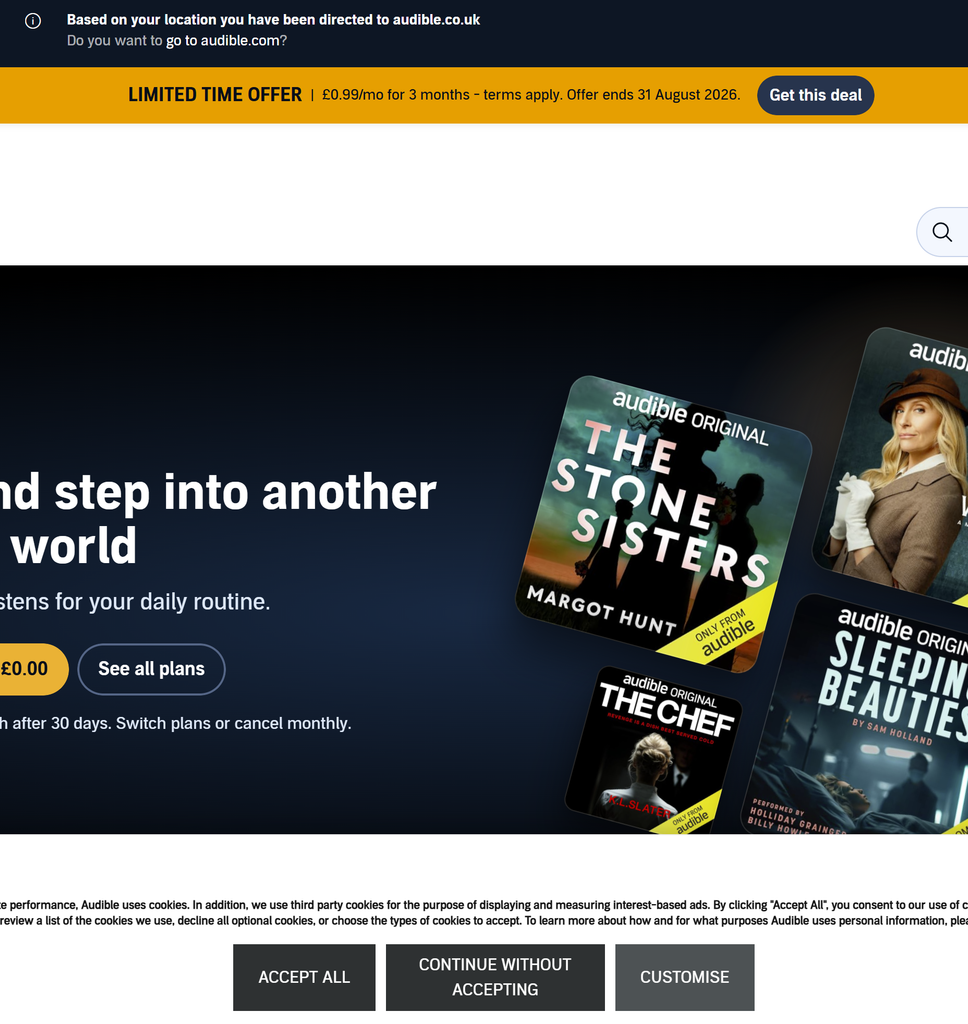
    Narrators: when you want to share links to your Audible titles—whether with potential clients, on social media, or simply as examples of your work, there’s nothing more frustrating than discovering that your carefully chosen link leads here:

    Instead of arriving at the audiobook you intended, your visitor has been bounced to the homepage of their regional Audible marketplace. Somewhere near the top is a small banner asking whether they really wanted to visit Audible.com – but it’s remarkably easy to miss. Even if they notice it, they may have no idea why they need it.

    At that point, many visitors will simply assume the link is broken. So, how do we create Audible links that stand a better chance of taking people where we actually intended?


    First, clean up the link

    When you copy an audiobook address from Audible, you will often get considerably more than the actual product URL. It may look something like this:

    https://www.audible.com/pd/Shadowless-Audiobook/B09VCRQ79K?ref_pageloadid=123456789&pf_rd_p=abcdef&pf_rd_r=987654321&plink=example&ref_=adblp13npsbx_1_0
    

    It looks formidable, but the information identifying the audiobook ends here:

    https://www.audible.com/pd/Shadowless-Audiobook/B09VCRQ79K
    

    Everything beginning with the question mark consists of additional parameters. These may record where the link was copied from, identify a particular Audible page element, preserve browsing information or support marketing attribution.

    For an ordinary product link, most of this can be removed. The clean starting point is therefore:

    https://www.audible.com/pd/Shadowless-Audiobook/B09VCRQ79K
    

    Before reaching for the delete key, however, there is one important exception.

    One important exception: ACX bounty links

    Before removing anything from an Audible URL, make sure that it is not an ACX bounty referral link.

    For eligible audiobooks produced through ACX, rights holders and producers may be given unique referral links. If a qualifying new Audible customer follows one of these links and makes the required purchase, the person whose link was used may receive a bounty payment.

    In this case, the additional information in the link is not disposable browser clutter: it is what allows ACX to attribute the referral to you.

    A bounty link should therefore be copied directly from the completed project in your ACX account and used exactly as supplied. Do not shorten it manually, strip away its tracking information or attempt to reconstruct it from the ordinary Audible product URL.

    This leaves us with two different kinds of link for two different purposes:

    • Use the ACX bounty link when promoting an eligible audiobook directly to prospective listeners and preserving referral attribution matters.
    • Use a clean, marketplace-specific link when presenting professional credits, portfolio examples or an international catalogue where dependable access to the correct listing is the priority.

    The rest of this article concerns ordinary Audible product links rather than ACX bounty referral links.


    Building a safer Audible link

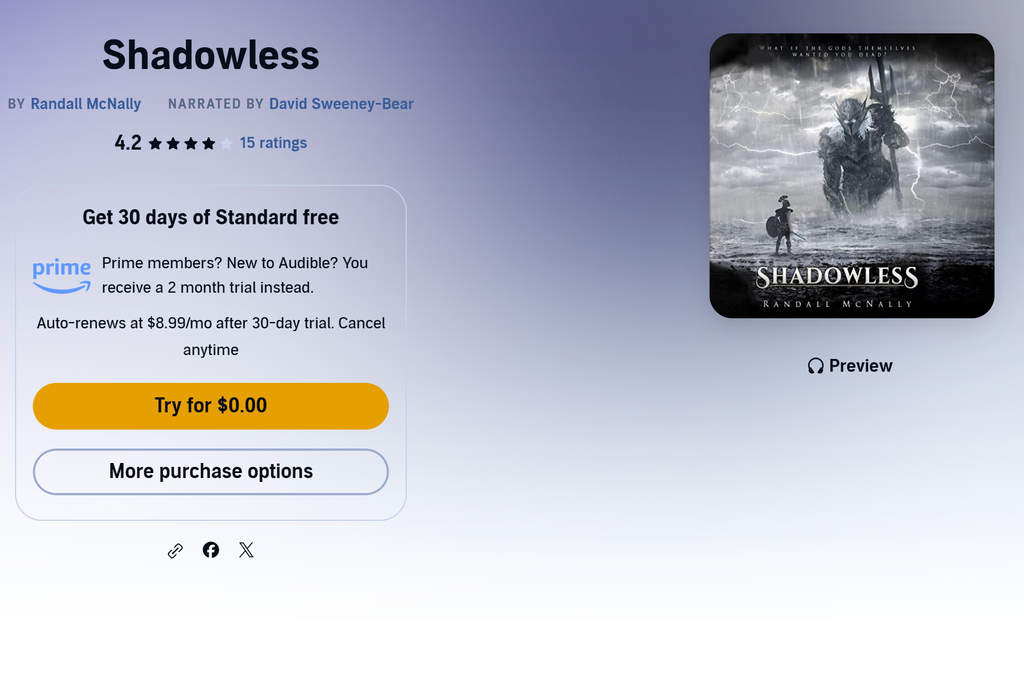
    Let’s take my audiobook Shadowless as an example. Its clean US product address is:

    https://www.audible.com/pd/Shadowless-Audiobook/B09VCRQ79K
    

    Here is what each part does:

    • https://www.audible.com selects the US Audible marketplace.
    • /pd/ tells Audible that this is a product-detail page.
    • Shadowless-Audiobook is the human-readable title.
    • B09VCRQ79K is the ASIN: the unique identifier for this particular Audible listing.

    The ASIN is the crucial part. Tracking codes and other material copied from your browser can usually be removed, but the ASIN identifies the actual product page.

    Now we can add the first instruction:

    ?ipRedirectOverride=true
    

    The question mark marks the beginning of the additional URL parameters. This parameter asks Audible not to replace the marketplace in the address with one selected from the visitor’s IP location.

    Our link now looks like this:

    https://www.audible.com/pd/Shadowless-Audiobook/B09VCRQ79K?ipRedirectOverride=true
    

    Next, we add:

    &overrideBaseCountry=true
    

    The ampersand joins one parameter to the next. This second instruction reinforces that Audible should use the base country represented by the .com address.

    That gives us:

    https://www.audible.com/pd/Shadowless-Audiobook/B09VCRQ79K?ipRedirectOverride=true&overrideBaseCountry=true
    

    Finally, we add:

    &language=en_US
    

    This explicitly requests the US-English version of the page rather than leaving Audible to infer a language from the visitor’s browser, cookies or location.

    The completed link is:

    https://www.audible.com/pd/Shadowless-Audiobook/B09VCRQ79K?ipRedirectOverride=true&overrideBaseCountry=true&language=en_US
    

    In other words, its structure is:

    [Audible marketplace]/pd/[title]/[ASIN]?[redirect override]&[country override]&[language]
    

    These additions do not bypass geographic publishing rights, nor do they turn a US listing into its UK or Australian equivalent. They simply give Audible clearer instructions to open the specific marketplace and product page named in the link.


    Building links for different Audible marketplaces

    The same technique can be used to create direct links for different Audible marketplaces. The important point, however, is that changing the domain may not be enough.

    For example, the US edition of Shadowless uses this ASIN:

    B09VCRQ79K
    

    Its safer US link is therefore:

    https://www.audible.com/pd/Shadowless-Audiobook/B09VCRQ79K?ipRedirectOverride=true&overrideBaseCountry=true&language=en_US
    

    The UK listing has a different ASIN:

    B09VCRKCZR
    

    Its corresponding UK link is:

    https://www.audible.co.uk/pd/Shadowless-Audiobook/B09VCRKCZR?ipRedirectOverride=true&overrideBaseCountry=true&language=en_GB
    

    It would be tempting simply to replace .com with .co.uk while retaining the US ASIN. Sometimes that appears to work, because certain titles share an identifier across marketplaces. It should not, however, be assumed.

    Different regional editions can have:

    • Different ASINs
    • Different publishers
    • Different release dates
    • Different cover artwork
    • Different ratings and reviews
    • Availability in one marketplace but not another

    To build a reliable regional link, search for the audiobook separately on each Audible marketplace, open the correct product page and copy the ASIN from that page’s address.

    The principal English-language marketplaces include:

    • audible.com — United States and many other international customers
    • audible.co.uk — United Kingdom and Ireland
    • audible.com.au — Australia and New Zealand
    • audible.ca — Canada

    Australia and New Zealand share the Australian Audible marketplace; there is no separate audible.co.nz store.

    A safer Australian or New Zealand link would therefore follow this structure:

    https://www.audible.com.au/pd/[TITLE]/[AU-ASIN]?ipRedirectOverride=true&overrideBaseCountry=true&language=en_AU
    

    But do not construct it merely by inserting the US or UK ASIN. First confirm that an Australian listing exists and take the identifier from that particular page.

    The procedure is therefore:

    1. Find the audiobook independently in each marketplace.
    2. Confirm that it is the correct narration and edition.
    3. Copy that marketplace’s product URL and ASIN.
    4. Remove expendable tracking information.
    5. Add the redirect, base-country and language parameters.
    6. Test the result while signed out or in a private browser.

    At that point you have a set of dependable country-specific links—not one supposedly universal link that may behave differently according to who clicks it.


    One link on your website, several possible destinations

    Maintaining separate US, UK and Australian links solves one problem, but creates another: which one should you actually give to the visitor?

    My own approach is to place the verified regional links behind the audiobook covers on my website. When somebody clicks a title, a small piece of browser-side code uses regional information available from their browser—such as its locale and time zone—to select the most likely Audible marketplace.

    My current routing is deliberately simple:

    • Visitors in the UK or Ireland are directed to audible.co.uk.
    • Visitors in Australia or New Zealand are directed to audible.com.au.
    • Visitors elsewhere are directed to audible.com.

    Each destination is a separately researched product listing with its own verified ASIN and redirect-resistant URL. The system does not merely take one US link and replace its domain.

    You can see this working in the audiobook catalogue on my audiobook narration portfolio. The cover appears to have one ordinary link, but its destination is selected when the visitor follows it.

    Browser-based territory detection is not infallible. Someone may have unusual language settings, be travelling, or use a VPN. It is therefore best regarded as a helpful first choice rather than indisputable knowledge of where the listener belongs. Where possible, visible links allowing visitors to choose another marketplace make a useful fallback.

    The advantage is that I can share one permanent page on my own domain while retaining control over what happens next. If Audible changes a listing, an ASIN proves incorrect or a book appears in another marketplace, I can update the destination without changing links already shared in emails, posts or promotional material.


    So, how do you link yours?

    Audible’s marketplace system is more complicated than it first appears, and some of the parameters described here are useful working methods rather than a formally documented permanent-link standard. What works today may change, and a link that behaves perfectly in my browser in Ireland may produce a different result for someone elsewhere.

    How do you link to your Audible titles? Do you use clean marketplace links, ACX bounty links, adbl.co, your own redirect system—or something I haven’t covered here?

    If you try any of the examples above, let me know in the comments which country you are visiting from, which marketplace the link targeted, and where Audible actually sent you. Between us, perhaps we can build a clearer picture of what works.

  • “Cratchit: A Christmas Carol Continues” by R. M. Bouknight

    “Cratchit: A Christmas Carol Continues” by R. M. Bouknight

    CRATCHIT:

    A Christmas Carol Continues


    Audiobook sample from Cratchit: A Christmas Carol Continues by R. M. Bouknight, narrated by British male narrator David Sweeney-Bear.

    Thirteen Christmases ago, the Spirits came to save a soul. Now they’ve returned… to save a family.

    The Cratchits are no longer poor, but their struggles are far from over.

    Once a humble clerk and devoted family man, Bob Cratchit is seduced into a world that would corrupt even the truest of hearts.

    His wife and grown children face their own trials of love, loyalty, and betrayal.

    This isn’t a retelling of A Christmas Carol — it’s a new chapter. A richly imagined sequel filled with warmth, conflict, humor, and hope.

    At its heart is a family bound by love, yet haunted by secrets.

    If you were moved by A Christmas Carol, let the Spirits move you… again.


    .cratchit-narrator-note, .cratchit-narrator-note p { text-align: justify; } @media (min-width: 782px) { .cratchit-narrator-note { position: relative; left: 50%; width: min(920px, calc(100vw – 64px)); max-width: none !important; margin-right: 0 !important; margin-left: 0 !important; transform: translateX(-50%); font-size: 18px; } }

    It has been a great pleasure to narrate and produce this meticulously crafted continuation of Dickens’ classic tale by R M Bouknight.

    The vivid cast of characters gave me plenty to get my teeth into as a narrator, and I especially enjoyed adding the finishing touches with some hand-picked music accompaniment for the Chapter intros.

    Robert was an absolute joy to work with. He has a keen sense of timing and rhythm, not only in his writing, but in the audiobook format too. His suggestions and direction were invaluable in helping me to get the most out of my performance.

    I hope listeners enjoy the audiobook at least as much as I enjoyed narrating and producing it.


    cratchitbook.com


    Out now at Audible

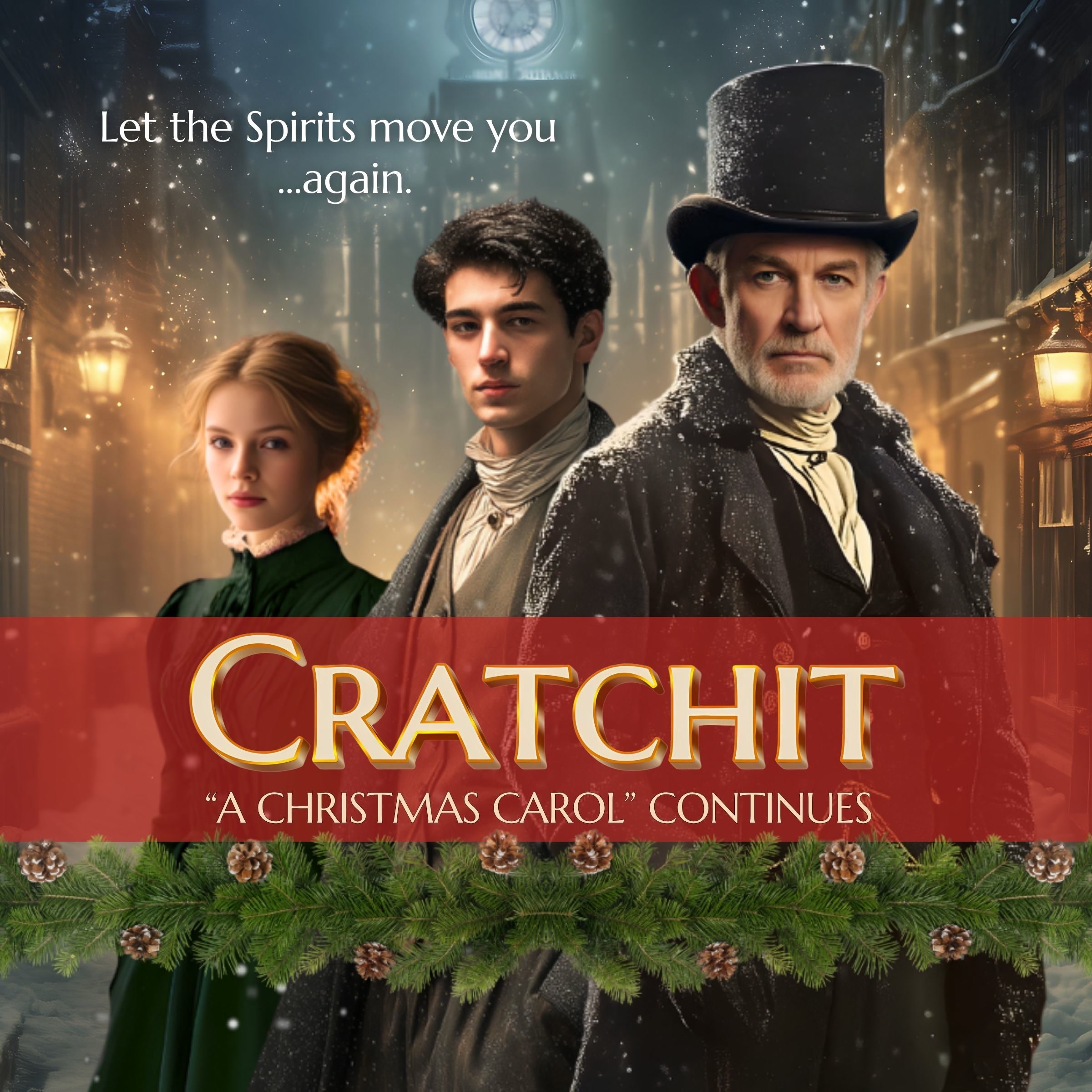
    Cratchit: A Christmas Carol Continues audiobook cover by R. M. Bouknight, narrated by David Sweeney-Bear
    Cratchit: A Christmas Carol Continues — narrated by David Sweeney-Bear.

    Listen now at Audible

    Release date

    08-28-26

    Language

    English

    Format

    Unabridged Audiobook

    Length

    3 hrs and 46 mins

  • “The Secret on the Second Shelf” by Jonathan White

    “The Secret on the Second Shelf” by Jonathan White

    The Secret on the Second Shelf


    If your mum vanished on Bonfire Night, how far would you go to find the truth?

    When fourteen-year-old Tim Shaw is pulled 300 years into the past, he finds himself caught in a dangerous race against time. To uncover what happened to his missing mum, Tim must face shape-shifting monsters that can transform from human to bird in the blink of an eye.

    Guided by strange dreams and a mysterious golden compass, Tim explores the streets of Cambridge in this children’s time travel fantasy story where history, mystery, and adventure collide. Along the way, he’s joined by Gemma Bowen, his sharp-witted art club tutor, as they follow hidden clues and uncover a secret far greater than either of them imagined.

    Packed with mystery, supernatural danger, and thrilling adventure, The Secret on the Second Shelf is a fantasy novel for readers aged 8+, ideal for fans of fantasy books, time travel adventures, and stories with brave heroes and dark secrets.


    Find out more at https://thesecretonthesecondshelf.com/


    It was an absolute pleasure to narrate and produce this outstanding supernatural horror mystery by Jonathan White.

    Here’s a live reading of a pivotal scene from the book – I do enjoy a good ‘baddy’!


    Out now at Audible

    Audiobook cover for The Secret on the Second Shelf by Jonathan White, a spooky children’s horror story narrated by DSB Audio
    The Secret on the Second Shelf by Jonathan White — a chilling children’s horror audiobook narrated by DSB Audio.

    Listen on Audible

    Release date

    05-20-26

    Language

    English

    Format

    Unabridged Audiobook

    Length

    4 hrs and 22 mins

    Publisher

    Jonathan Julian White

    Categories

    Children’s Audiobooks


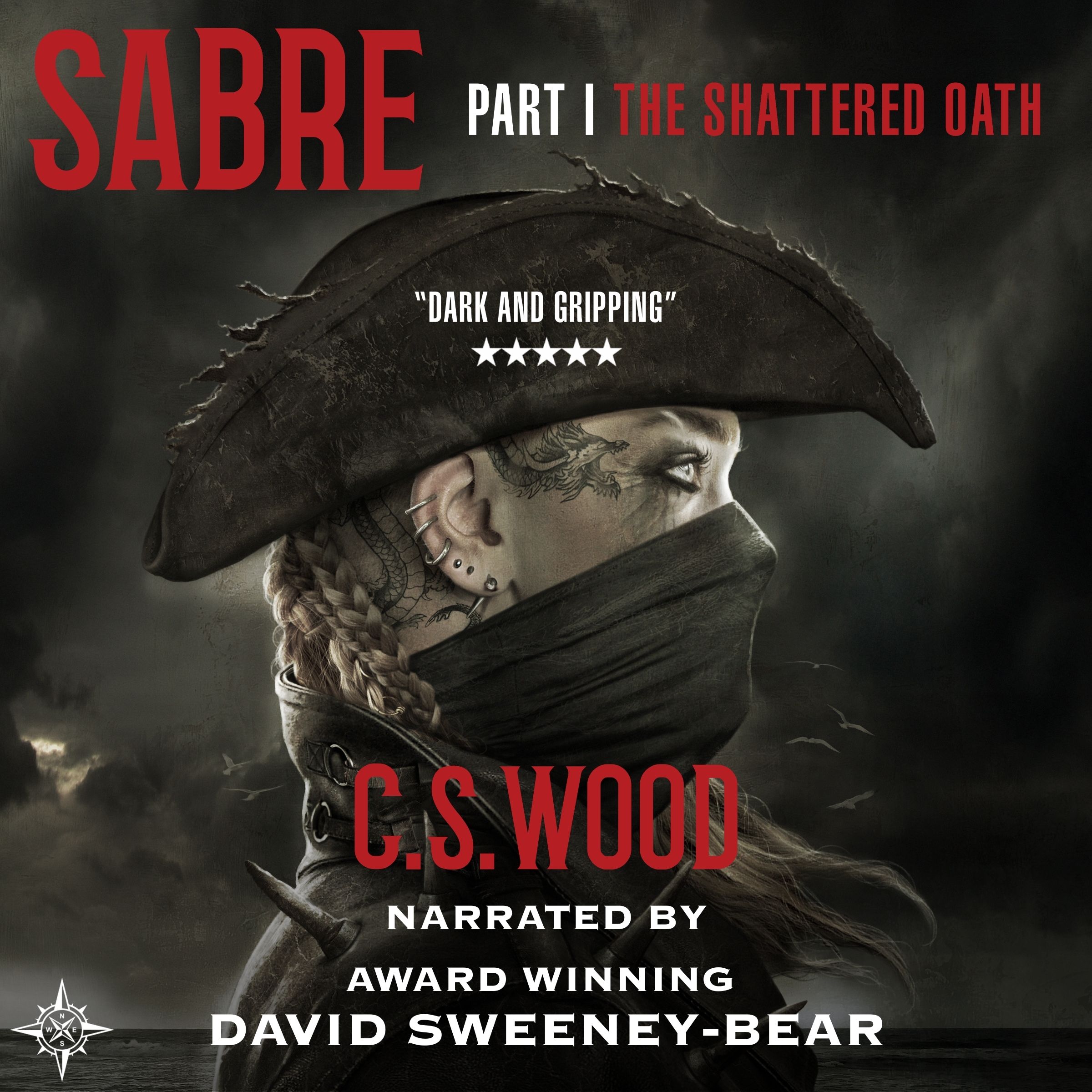
  • “Sabre, Part I: The Shattered Oath” by C. S. Wood

    “Sabre, Part I: The Shattered Oath” by C. S. Wood

    SABRE:

    Part I: The Shattered Oath


    Listen to a sample from Sabre, Part 1: The Shattered Oath, a dark gothic fantasy audiobook narrated by David Sweeney-Bear.


    Winner of the SOVAS Voice Arts Awards 2026, David Sweeney-Bear brings this grim world and its iconic characters to life in a masterful performance.

    Described as ‘savage and pure carnage’ by reviewers, SABRE is a Gothic dark fantasy brimming with ruthless power struggles, perilous adventures, blood soaked twists, fraught romances and iconic characters to die for, making this series your next obsession…

    Like Game of Thrones set to sea with a dose of The Poppy War and the grit of the First Law, all thrown into a unique Gothic era.

    The Night Devils rule the seas without mercy. For two centuries, they have held the Merithian Empire at bay, binding them to an ocean of blood.

    Yet, the unit faces disbandment for its growing power and brutality.

    And when the vice admiral mysteriously vanishes, order falls to the infamous Commander Grenyard – a sailor feared for his searing hatred and cruelty. Thrust into this storm is ten-year-old, Todd Witherow. Conscripted into his late brother’s squadron, Sabre, Todd must endure war and survive Grenyard’s wrath while concealing a secret deemed punishable by death.

    Back home, their kingdom edges towards ruin… The industrial revolution has been accelerated by a precious new resource, hycinthium-lapis. But this awakens dark ambitions. Corrupt lords desire supremacy, tainted Skuas seek dominion and King Oborus clings to his reign.

    Only one man may prevent the slaughter: Todd’s imprisoned father and disgraced knight of the realm, Sir Alan Witherow.

    Under oath, three veterans embark upon a perilous journey to rescue him, so he may help prevent a revolution and see his son returned. But time is short.

    Their lives, the fate of their realm, lay in the hands of the legendary Sabres. Rave reviews and the narrator’s phenomenal delivery prove this epic dark fantasy series is not to be missed!


    What a great joy it was to work on this epic Gothic Fantasy by C.S Wood!

    Featuring a diverse set of characters from the grim and grizzled Sabres, to the young initiates, and the dark and twisted Grenyard and Rias. This audiobook gave me plenty to think about in terms of character voices.

    Craig was truly an inspirational person to work with. His passion and enthusiasm for the work really shines through.

    I also thoroughly enjoyed the opportunity to provide some original music composition for the opening credits.

    I can’t wait for part 2!


    Find out more at:


    Sabre, Part 1: The Shattered Oath dark gothic fantasy audiobook cover
    Sabre, Part 1: The Shattered Oath — a dark gothic fantasy audiobook narrated by David Sweeney-Bear.

    Listen now at Audible

    Series

    Book 1,

    Sabre

    Release date

    03-31-26

    Language

    English

    Format

    Unabridged Audiobook

    Length

    6 hrs and 35 mins

    Publisher

    Compass-Publishing UK

    Categories

    Science Fiction & Fantasy

  • “The Still Point” by Scott H. Blake

    “The Still Point” by Scott H. Blake

    The Still Point

    Lessons in Awareness from a World on Edge


    Audiobook Preview

    There is a moment on every journey when the world goes quiet. Airports, checkpoints, and crowded markets fall away until only stillness remains. In that silence, awareness begins.

    The Still Point is a meditation on risk, empathy, and attention, told through 20 years of travel across 65 countries. From the Afghan desert to the streets of Beirut, from the markets of Lagos to the mountain roads of Peru, Scott H. Blake reflects on what danger, culture, and human instinct can teach us about perception and about ourselves.

    Part memoir and part field guide, this audiobook explores how awareness is built not through fear but through patience. It is the discipline to observe before acting, to listen before judging, and to find steadiness even when certainty disappears. Along the way, you meet the quiet teachers of this craft: drivers, interpreters, aid workers, and strangers who recognize risk before it arrives and kindness where others overlook it.

    The Still Point is not about adventure for its own sake. It is about endurance, empathy, and the ability to remain calm in an age that rewards distraction. Each story invites you to slow down, to see more clearly, and to carry that clarity into every conversation, every crisis, and every crossing.

    Told in precise, unhurried prose, The Still Point reminds us that awareness is not a talent but a practice, one that begins the moment the noise fades.


    Listen now at audible.com

    The Still Point audiobook cover

    https://www.audible.co.uk/pd/B0GM39RLRX


    Release date

    06-02-26

    Language

    English

    Format

    Unabridged Audiobook

    Length

    1 hr and 54 mins

    Publisher

    Scott H. Blake

    Categories

    Travel & Tourism